

Project Case

How a Global Manufacturer Identified and Entered a New Growth Market

Foresight Strategy Innovation

The case at a glance

Close to 90% of our client's revenue depended on a single industry: filtration for transportation and industry, at a time when battery electric, hydrogen, hybrid and combustion drivetrains all looked plausible.

In a first phase, Bluemorrow used foresight-driven strategy to test whether diversification would pay off across every plausible future of the core business.

In the second, we narrowed the indoor air quality market down to 11 priorities.

The result is a second growth engine outside transportation: the new Intelligent Air Solutions division already generates around 10% of group revenue, and management is targeting 25%.

60+

Experts aligned across 3 continents

70

Opportunities scanned

11

Prioritized for development

10 %

Of group revenue today

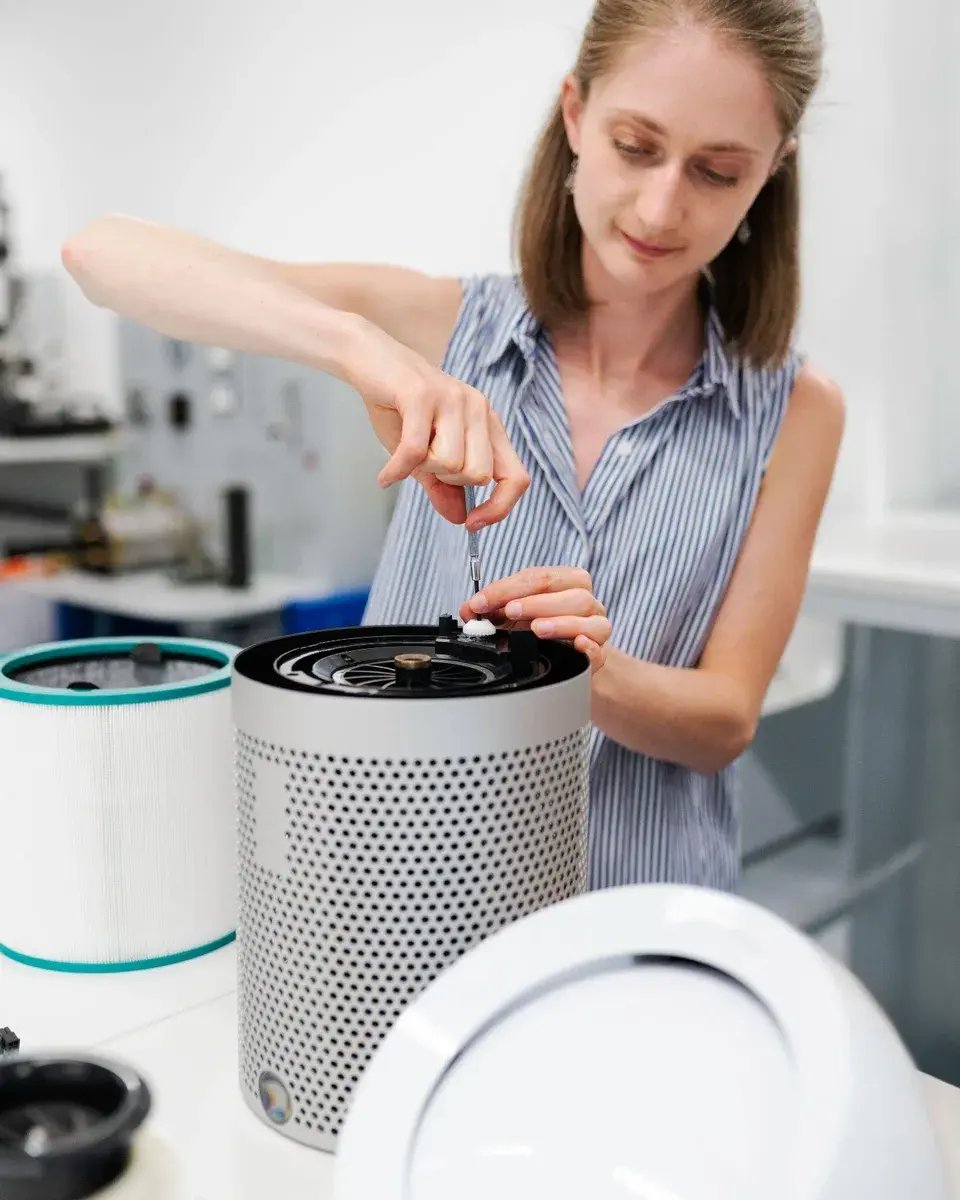
Engineer assembling an air purifier with a cylindrical filter in a development lab, representing new indoor air quality solutions

Challenge

For more than 80 years, our client built a dominant position in filtration: oil, fuel and cabin air filters for cars, trucks, trains and heavy equipment. More than €4 billion in revenue, over 20,000 people, operations in more than 25 countries.

Then the transportation industry began to shift in several directions at once. Battery electric, hydrogen, hybrids and next generation combustion engines were all plausible. OEM supply chains were being renegotiated. Digital entrants were circling the aftermarket.

Management had already made a first move: an acquisition in European HVAC filtration. A signal of intent. But a signal is not a strategy.

Which opportunities in indoor air deserved investment, in what order, and built how?

3 plausible futures

Weighted by the client's own leadership

42% on the 2 disruptive futures

  • Steady ChangeCombustion stays dominant, change is gradual

    58%

  • Green TransformationRapid electrification, supply chains redrawn

    28%

  • One Step BackProtectionism, alternative drivetrains stall

    14%

Approach

Two phases, each building on the last. First, we translated deep uncertainty about the future of transportation into a clear strategic imperative. Then we turned that imperative into a ranked portfolio of concrete opportunities, each with a development path.

Phase 1

We stopped asking which future would win.

54 leadership interviews. 281 influencing factors, condensed to 10 key drivers of change. 153 projections, tested in 578 consistency checks. The result was 3 plausible futures for transportation, each weighted by the client's own leadership:

  • Steady Change, 58%: combustion stays dominant, change is gradual
  • Green Transformation, 28%: rapid electrification, supply chains redrawn
  • One Step Back, 14%: protectionism, alternative drivetrains stall

Standing still was the riskier bet. The critical insight was not which scenario was most likely. It was what the distribution revealed: leadership itself put a 42% probability on the 2 disruptive futures. In both, a transportation-heavy revenue base faces structural headwinds.

Three strategy variants were stress tested against all 3 futures. One move created value in every one of them: entering new filtration markets. Diversification stopped being a matter of ambition. It became the analytically safe choice.

The full case shows all 3 strategy variants, the robustness ratings and the 10 further recommendations.

Reality check

Today, each of the 3 scenarios is visible somewhere in the world

  1. Green TransformationRapid electrification, supply chains redrawn

    ~55%

    Chinaof new cars sold were electric

  2. Steady ChangeGradual shift, combustion still dominant

    28%

    Europeof new cars sold were electric

  3. One Step BackPolicy reversal, alternative drivetrains stall

    <10%

    United Statesof new cars sold were electric, after federal purchase incentives ended in September 2025

Electric car share of new car sales, 2025. Source: International Energy Agency, Global EV Outlook 2026. The pairing of scenarios and regions is Bluemorrow's reading, not an IEA finding.

Two white ventilation outlets in front of a concrete wall, representing the indoor air quality market
Phase 2

From 77 ideas to 11 bets.

With the imperative set, the next question was sharper: where exactly in indoor air and intelligent air solutions should the company play, and how?

We built an Opportunity Radar across 5 search fields, from Comfort & Wellbeing to Regulated Air Quality. Expert interviews on 3 continents surfaced 45 opportunities. Patent databases, academic journals and industry conferences added 32 more.

77 raw ideas → 70 opportunities → 26 deep dives → 11 priorities with roadmaps

The full case includes the complete radar, the assessment criteria and how each of the 11 was assigned a development path: acquire, partner or build.

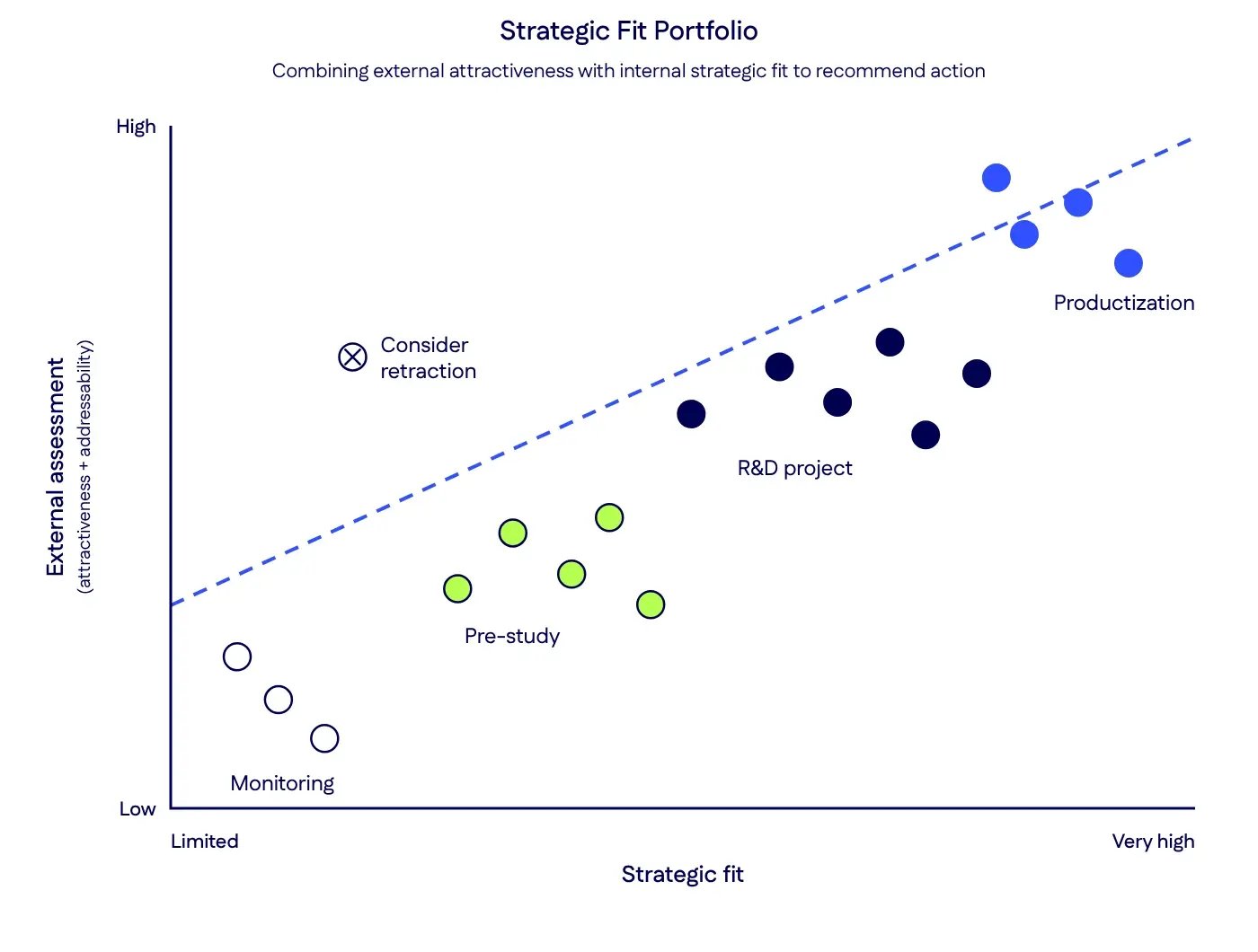
The radar also said no. It flagged one of the client's ongoing initiatives for retraction. For management, that was a sign the process judged existing work by the same criteria as new ideas.

Which initiative, and why, is in the full case.

Beyond this case

The same pattern is playing out across the supplier industry.

German automotive employment has fallen by 100,000 jobs since 2019, and the VDA expects losses to reach 225,000 by 2035 (VDA, May 2026). Some suppliers are already moving: Schaeffler now builds components for humanoid robots and targets an order book in the hundreds of millions of euros by 2030 (Global Banking & Finance).

At the same time, the market our client entered is gaining regulatory weight. The EU Buildings Directive made indoor environmental quality a regulatory objective for the first time, with a transposition deadline of 29 May 2026 (European Commission).

Companies whose revenue depends on one industry can use the same approach: map the plausible futures of the core, then scan systematically for where the next growth pattern sits.

Outcome

The work laid the foundation for what is now the Intelligent Air Solutions division: 10% of group revenue today, with a long term ambition of 25%.

  • European and Asian business units aligned on growth priorities
  • 11 prioritized opportunities with development roadmaps: acquire, partner or build
  • The Opportunity Radar institutionalized as a capability the client now runs on its own, cycle after cycle
strategic-fit-portfolio

GET the full case.

13 pages. What's inside:

  • How 281 factors became 3 scenarios, step by step
  • The robustness logic that made diversification a safe bet
  • The full Opportunity Radar across 5 search fields
  • The Strategic Fit and Addressability portfolios
  • The 3 blockers and how they were resolved

Download the full case

FAQ

What is scenario-based strategizing?

A method that develops several plausible futures instead of one forecast and tests strategies against all of them. In this case, 281 factors were condensed into 3 scenarios for the transportation industry. More in our interview on scenario-based strategizing.

Why use scenario planning instead of forecasting?

Because some shifts cannot be forecast. In 2025, electric cars took nearly 55% of sales in China and under 10% in the US. A strategy built on one forecast would have been wrong in at least one major market.

How do you decide whether to diversify beyond a core business?

Stress test strategy variants across all plausible futures. If a move creates value in every scenario, it is a safe bet. Here, entering new filtration markets was the only move that did.

What is an Opportunity Radar?

A structured, repeatable scan of a new market across defined search fields, rated on external attractiveness and internal fit. Here: 5 search fields, 70 opportunities, 11 priorities.

How long until diversification shows in revenue?

In this case, the new Intelligent Air Solutions division reached roughly 10% of group revenue, with a management target of 25%.