
Are we truly prepared for what’s coming?
Are we missing blind spots?
Are we catching opportunities early enough?
Today’s pace of change is outgrowing traditional strategy cycles. Markets shift, technologies evolve, regulation tightens and uncertainty is no longer a distant concern. It’s already shaping decisions on a 3+ year horizon. Yet most organizations still optimize for a single “expected” future and revisit strategy only periodically.
Strategic windtunneling is a lean, pragmatic method to stress-test your existing strategy against plausible future developments - outside the established planning cycle.
Strategic windtunneling helps you pivot the strategy while focusing on what matters most and ensures your strategy remains resilient, agile, and opportunity-driven. By systematically challenging current strategic choices against emerging change, windtunneling helps you quickly uncover concrete risks and opportunities, expose blind spots, and identify where your strategy is already robust and where it needs adjustment.
Instead of asking “What should our next strategy be?” the question is: “How does our current strategy perform when the world changes?”.
Why Strategic Windtunneling matters?
Strategic windtunneling gives leaders a structured way to explore uncertainty, test assumptions, and identify where their strategy is strong and where it needs reinforcement.
With it, you can:
- Validate robustness – Identify which elements of your strategy hold up across different future conditions.
- Expose blind spots – Reveal vulnerabilities that remain invisible in a single-future planning logic.
- Surface concrete risks and opportunities – Directly link external change to strategic implications.
- Strengthen focus – Prioritize what truly matters instead of reacting to noise.
- Align teams – Create a shared understanding across strategy, portfolio, innovation, and risk functions.
Importantly, this happens without disrupting your established governance or planning cadence. It is a targeted intervention: lean, structured, and decision-oriented.
In short: it’s your early-warning system and your opportunity radar.
.webp?width=866&height=393&name=What%20Strategic%20Windtunneling%20Is%20(and%20Isnt).webp)
How does it work?
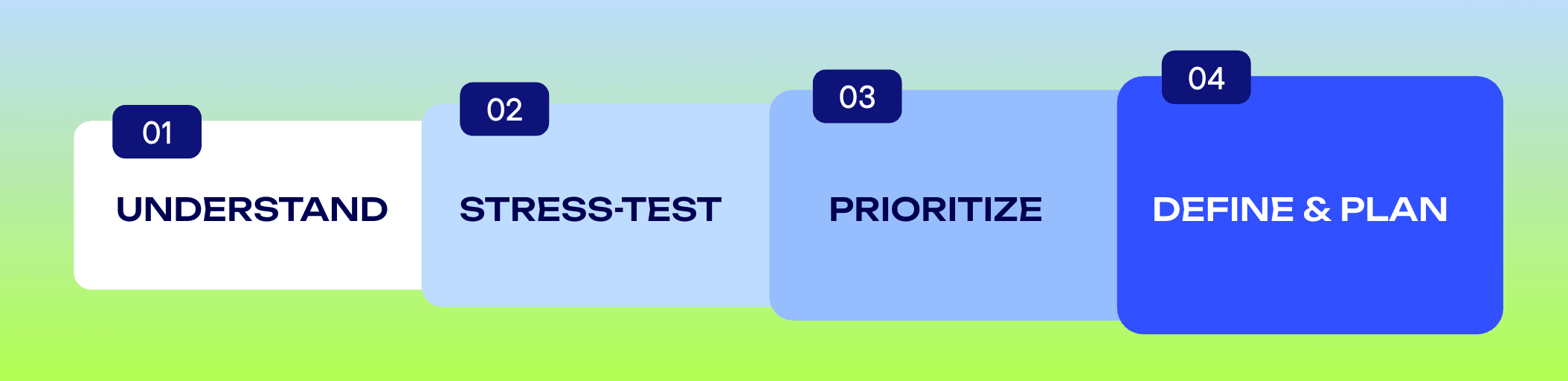
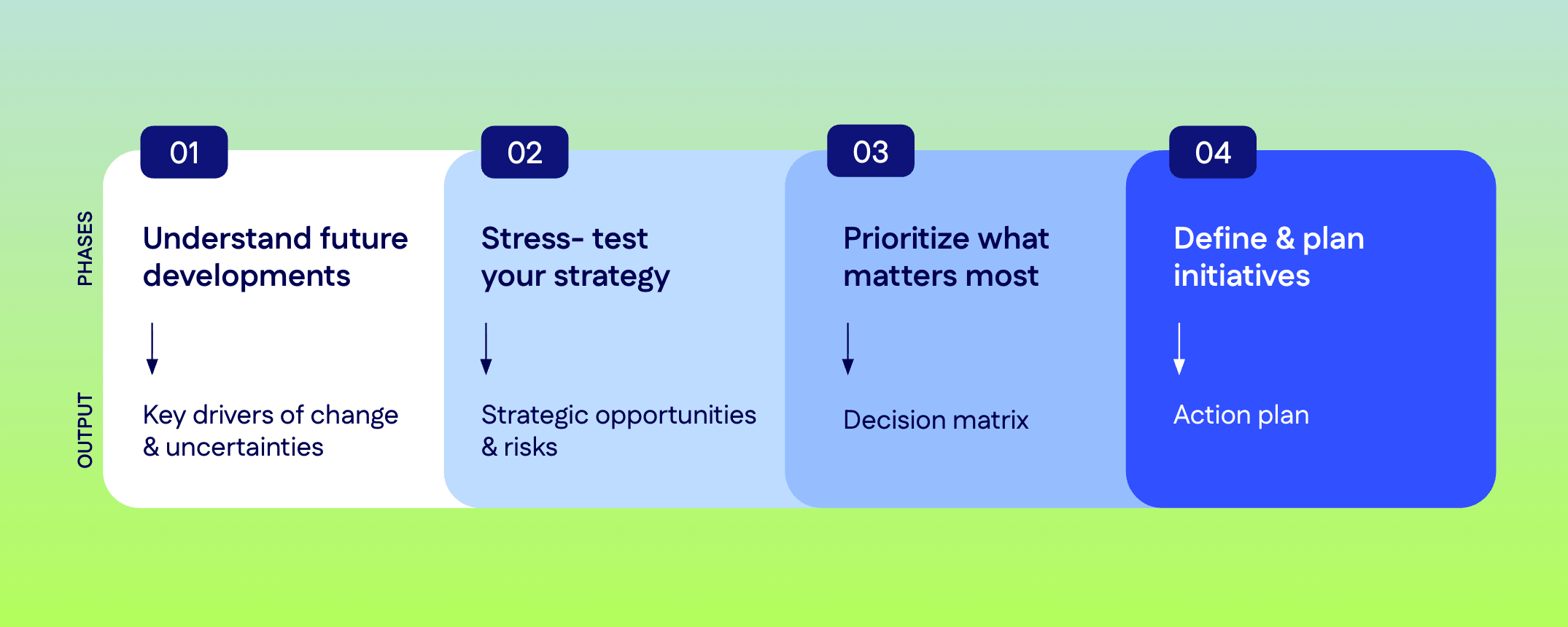
1. Understand future developments
We identify the key drivers shaping your external environment such as technological shifts, market dynamics, regulatory changes, or consumer behavior. These can be derived from robust trends, uncertainties, or alternative scenarios.
2. Stress-test your strategy
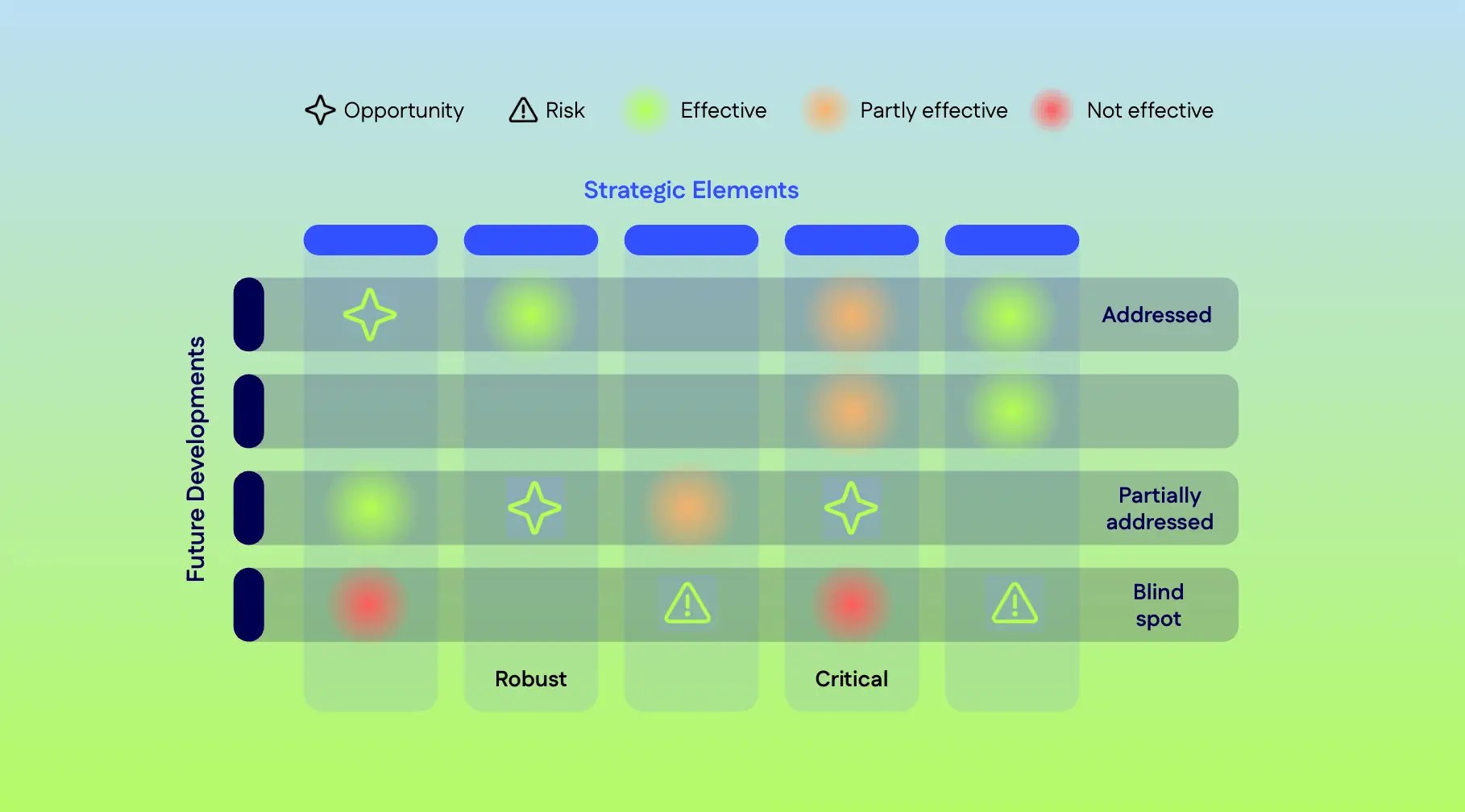
We assess how your existing strategic choices hold up under each future condition. This reveals gaps and robust strategy elements well as opportunities and risks tied to specific elements of your strategy.
3. Prioritize what matters most
We consolidate opportunities and risks into a clear portfolio and jointly prioritize them. This helps articulate where to adapt your strategy, where to invest, and where to re-focus efforts.
4. Define and plan initiatives
Finally, we translate insights into actionable initiatives, so teams know what to do next, not just what to think about.
What you get out of it
Windtunneling is designed to produce tangible, decision-ready outputs, not abstract strategic musings. At the end of the process, your organization will have:
- Future developments – A structured overview of the key trends and uncertainties shaping your external environment, described as concrete drivers of change and/or alternative scenarios.
- Strategic opportunities and risks – A mapped set of opportunities and risks derived directly from stress-testing your strategy against future developments, linked to specific strategic choices and conditions.
- Concrete Actions – A set of prioritized initiatives to leverage opportunities and mitigate risks, with clear ownership and next steps so teams know exactly what to do.
How Windtunneling complements the strategy cycle
Windtunneling is used to complement cyclical strategy development rather than replace it. The aim is to stress-test and future-proof existing strategy rather than building a strategy from scratch.
If you are looking for a foresight-driven strategy development approach, scenario-based strategizing is the method of choice: you build new scenarios, explore them broadly, and use them to inform the development of a new strategy. It is a powerful method which tends to be integrated into major strategy cycles rather than used between them.
Windtunneling starts from where you already are. The strategy exists. The question is not "what strategy should we build?" but "how does our current strategy perform under pressure?" This makes it fundamentally faster, more focused, and easier to act on, because the output is always tied directly to decisions you are already facing.
The two methods are complementary, not competing. Scenario-based strategizing builds the long-term strategic direction. Windtunneling keeps it honest between cycles. Used together, they give organizations both the ambition to plan for multiple futures and the agility to adapt as those futures unfold.
To see how this plays out in practice, explore our work with E.ON.
Final Thoughts
Windtunneling is not a replacement for your strategy process; it’s the mechanism that keeps it sharp between cycles. When uncertainty increases, leaders need fast, structured ways to test assumptions, pressure-check decisions, and uncover hidden opportunities.
If you’re looking to make your strategy more resilient and actionable, windtunneling is one of the most effective ways to start. Schedule a call with Julia to explore how it can work for your organization.