
In an era of permacrisis, the traditional three-year strategic plan has become a liability. For senior leaders, the challenge is no longer just executing a known strategy, but sensing which strategy will remain relevant two cycles from now. Strategic foresight is the formal organizational capability to detect, interpret, and act on weak signals of change before they become disruptive threats or missed opportunities.
At Bluemorrow, we view foresight not as a creative exercise, but as a rigorous decision system. It is the mechanism that converts external noise into high-conviction internal choices. This guide provides the blueprint for moving from reactive firefighting to a proactive, anticipatory stance that secures long-term competitive advantage.
What is a foresight-driven strategy and what isn't?
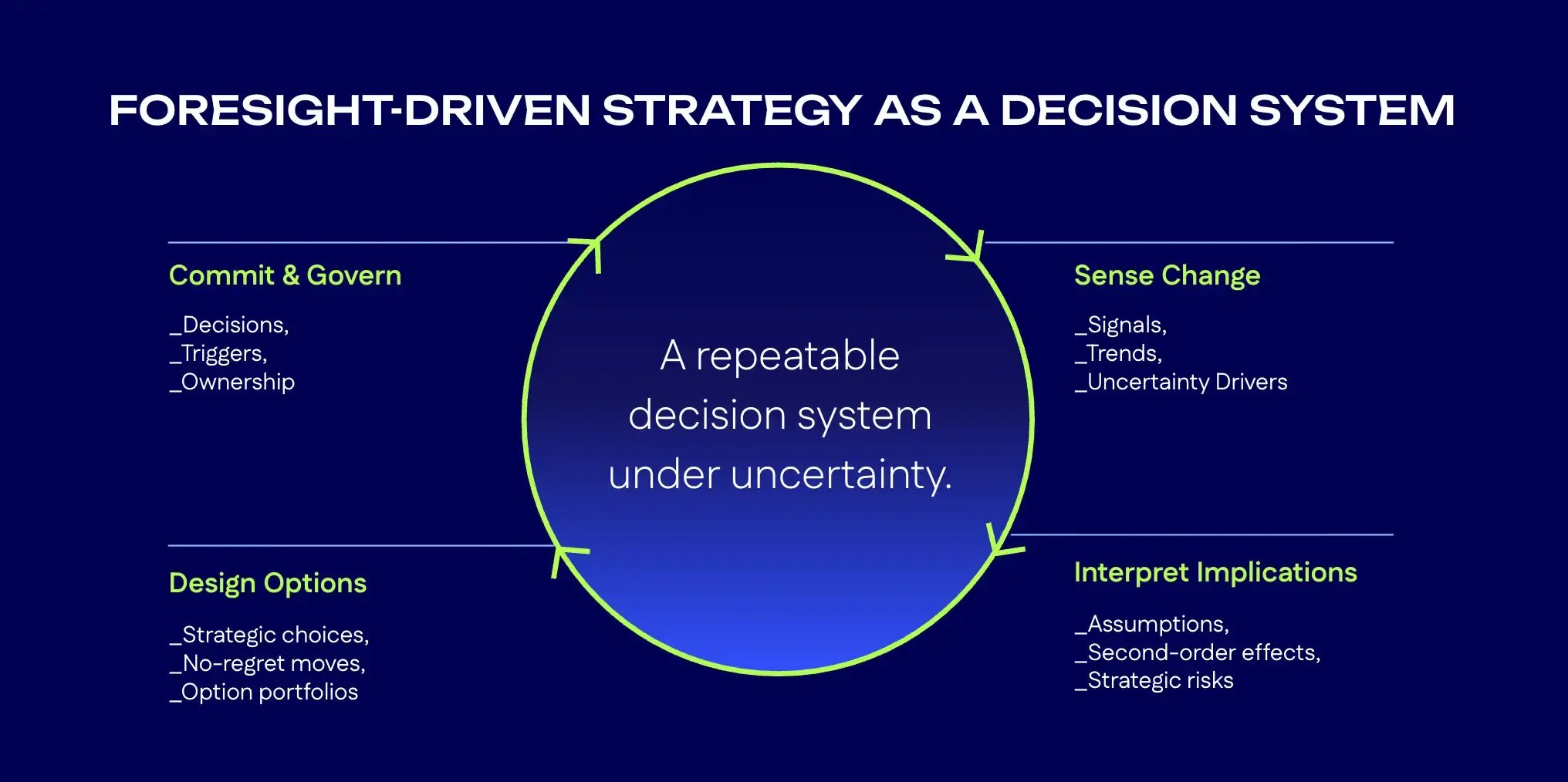
Foresight-driven strategy is a repeatable decision system that converts signals of change into strategic choices and commitments. It exists to change what leaders do, what they fund, pause, accelerate, or exit, before uncertainty hardens into market risk.
At its core, it is about expanding the range of futures leaders can see and preparing the organization to act across them. This is fundamentally different from producing trend reports or scenario decks. Without ownership, triggers, and integration into decision forums, foresight remains interesting but inert.
Leaders often ask whether foresight is simply a rebranded version of forecasting or scenario work. The distinction lies in intent. Forecasting tries to predict the future based on past data. Strategic foresight explores what is plausible and governs how insights translate into concrete decisions over time.
Strategic foresight fundamentals every leader should understand
Strategic foresight rests on a small number of fundamentals that senior leaders should be fluent in, even if they never run the analysis themselves. For a fuller picture of the core concepts, our fundamentals guide is a good place to start.
The future is plural , not singular
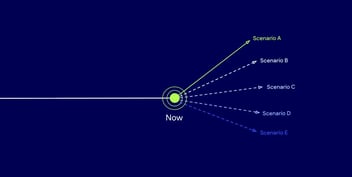
Foresight assumes multiple plausible futures can emerge depending on how technologies scale, regulations evolve, and systems interact. Strategy must therefore prepare for variation, not certainty.
Signals and drivers over predictions
Foresight focuses on change drivers and early signals, not predictions. Signals are weak, ambiguous indicators that underlying systems may be shifting. Their value comes from patterns over time, not from any single data point.
Decision-linked insight
Foresight only matters when it is decision-linked. Insight without a decision context creates intellectual comfort, not strategic advantage. Effective foresight is always anchored to leadership questions: Where should we place bets? What risks should we hedge? What options must we keep alive?
Why is strategic foresight the primary driver of modern resilience?
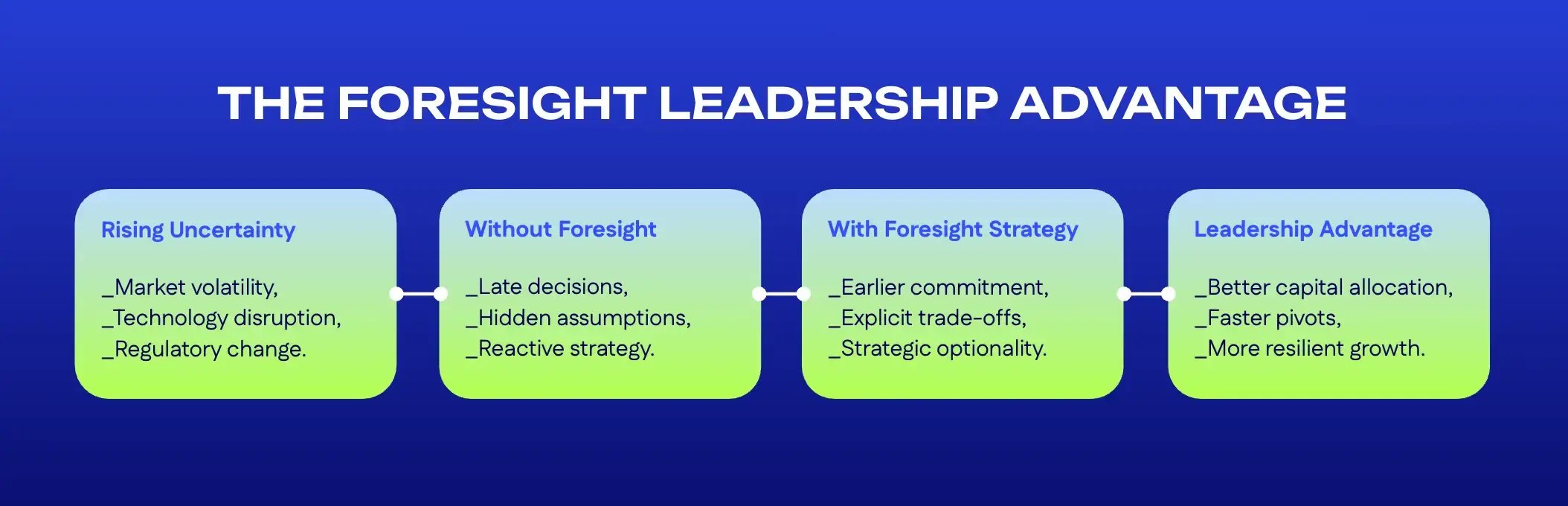
Strategic foresight is relevant because most organizations are no longer failing due to poor execution; they fail because they commit too late to the wrong assumptions. In environments where certainty arrives last, foresight is how you regain control over timing and optionality. This is the foundation on which foresight-driven strategy is built: without mature sensing and interpretation capabilities, strategic commitments remain reactive rather than anticipatory.
Because strategy is now made under structural uncertainty
Many leadership decisions today must be made before markets, technologies, or regulations stabilize. Strategic foresight allows organizations to act earlier by identifying where uncertainty matters most and distinguishing between reversible and irreversible decisions. This shifts strategy from reactive adjustment to proactive positioning.
Because traditional planning cycles are too slow
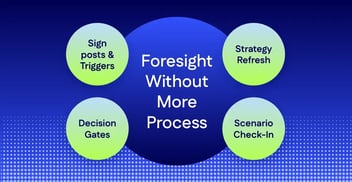
Annual planning and three-year roadmaps assume relatively stable conditions. Foresight introduces a continuous sensing and review loop that complements planning rather than replacing it. Leaders gain a mechanism to revisit assumptions, adjust portfolios, and reallocate resources without restarting the entire strategy process.
Because capital allocation carries increasing downside risk
As investments become larger and harder to unwind, the cost of being wrong rises. Strategic foresight improves capital allocation by making implicit bets explicit, clarifying where optionality is worth paying for, and defining exit conditions in advance.
Integrating the three strategic lenses: Foresight, Forecasting and Backcasting
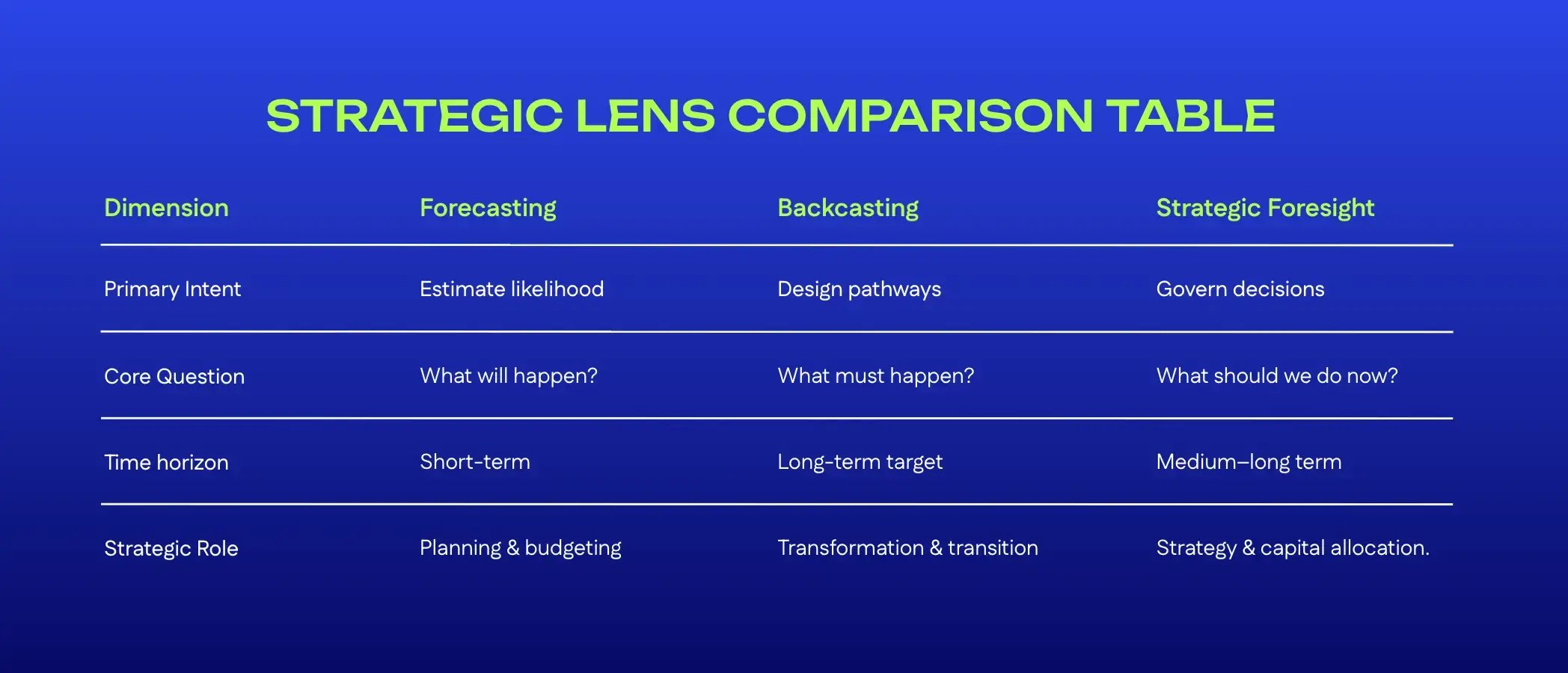
To build a future-ready organization, leaders must integrate three distinct strategic lenses. Using the wrong lens for the wrong problem leads to strategic friction.
-
Forecasting (the predictive lens): Estimates the most likely outcome based on historical data. Essential for near-term planning and budgeting, but struggles when structural breaks occur.
-
Backcasting (the normative lens): Starts with a defined future state, such as a net-zero ambition or a desired competitive position, and works backward to identify the milestones and capabilities required today. See how we applied this with a global FMCG player.
-
Strategic Foresight (the exploratory lens): Connects signals, forecasts, and backcast pathways into a single decision system. It does not stop at analysis; it translates insights into options and triggers that leaders actively govern.
The executive outcomes a foresight-driven strategy must deliver
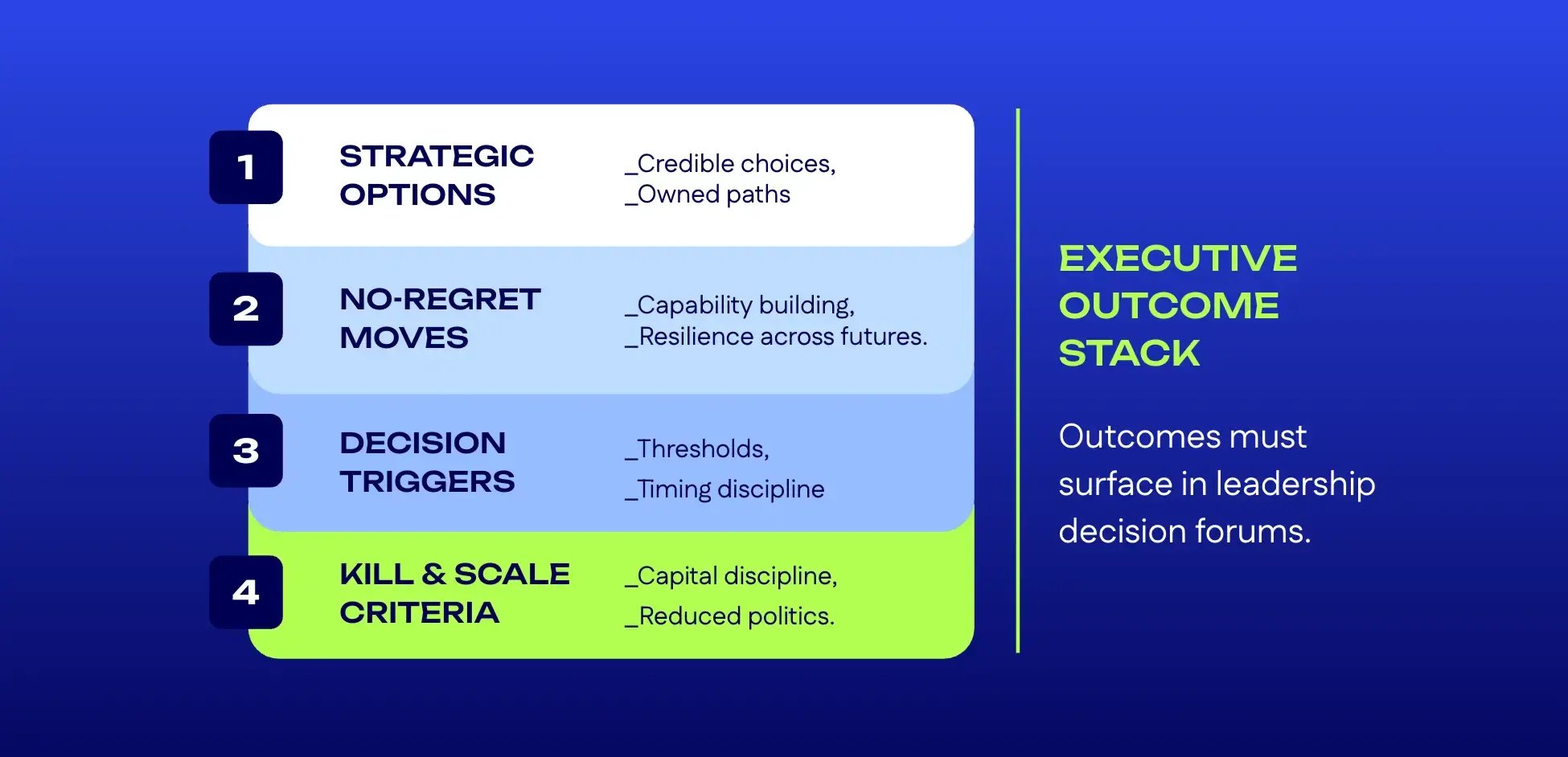
Foresight-driven strategy must deliver decision-grade outcomes, not generalized insight. For senior leaders, the test is simple: does this foresight work change a decision now, or define the conditions under which a decision will be made later?
Outcome 1: Clear strategic options, not abstract possibilities
The first outcome is a limited set of strategic options that are credible, comparable and owned. These options represent different ways the organization could respond if certain futures begin to materialize. Good options are explicit about strategic intent, upside potential, downside risk and the resources required to keep the option viable.
Outcome 2: No-regret moves that strengthen the core
Not all foresight requires waiting. A strong strategy identifies no-regret moves, actions that make the organization more resilient or competitive across multiple plausible futures. These often involve building foundational capabilities or investing in optional infrastructure.
Outcome 3: Explicit decision triggers
Triggers specify the conditions under which leadership will revisit a decision, accelerate an option or exit a path. Effective triggers are observable, measurable and directly linked to monitored signals. This removes ambiguity and reduces decision latency when uncertainty starts to resolve.
Outcome 4: Kill and scale criteria
Foresight should make it easier, not harder, to stop initiatives that no longer make sense. Clear criteria establish the rules under which options are expanded, paused or terminated. This reduces sunk-cost bias and limits internal politics.
Building an end-to-end strategic foresight framework
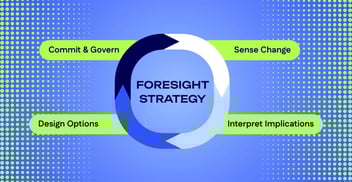
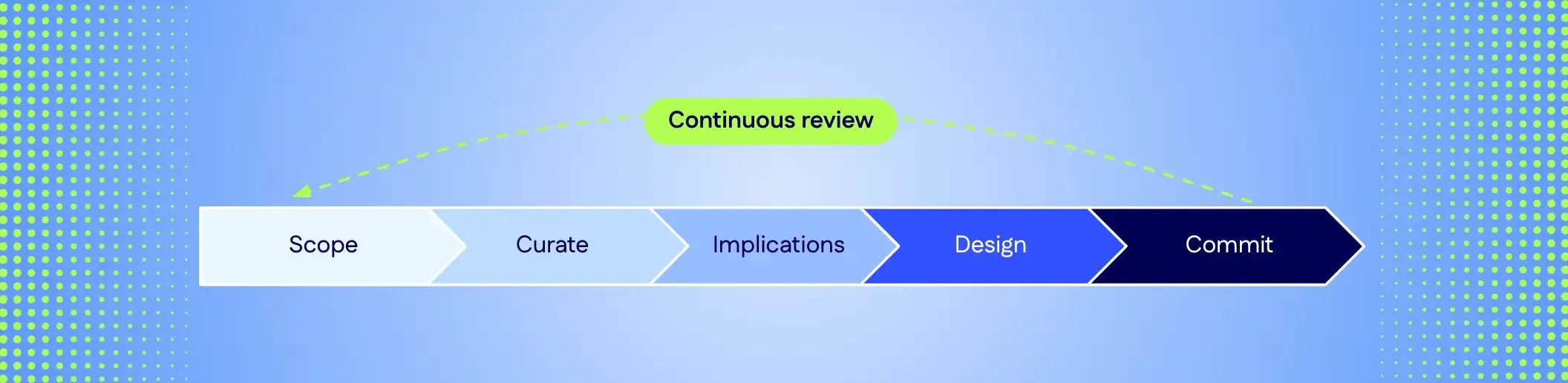
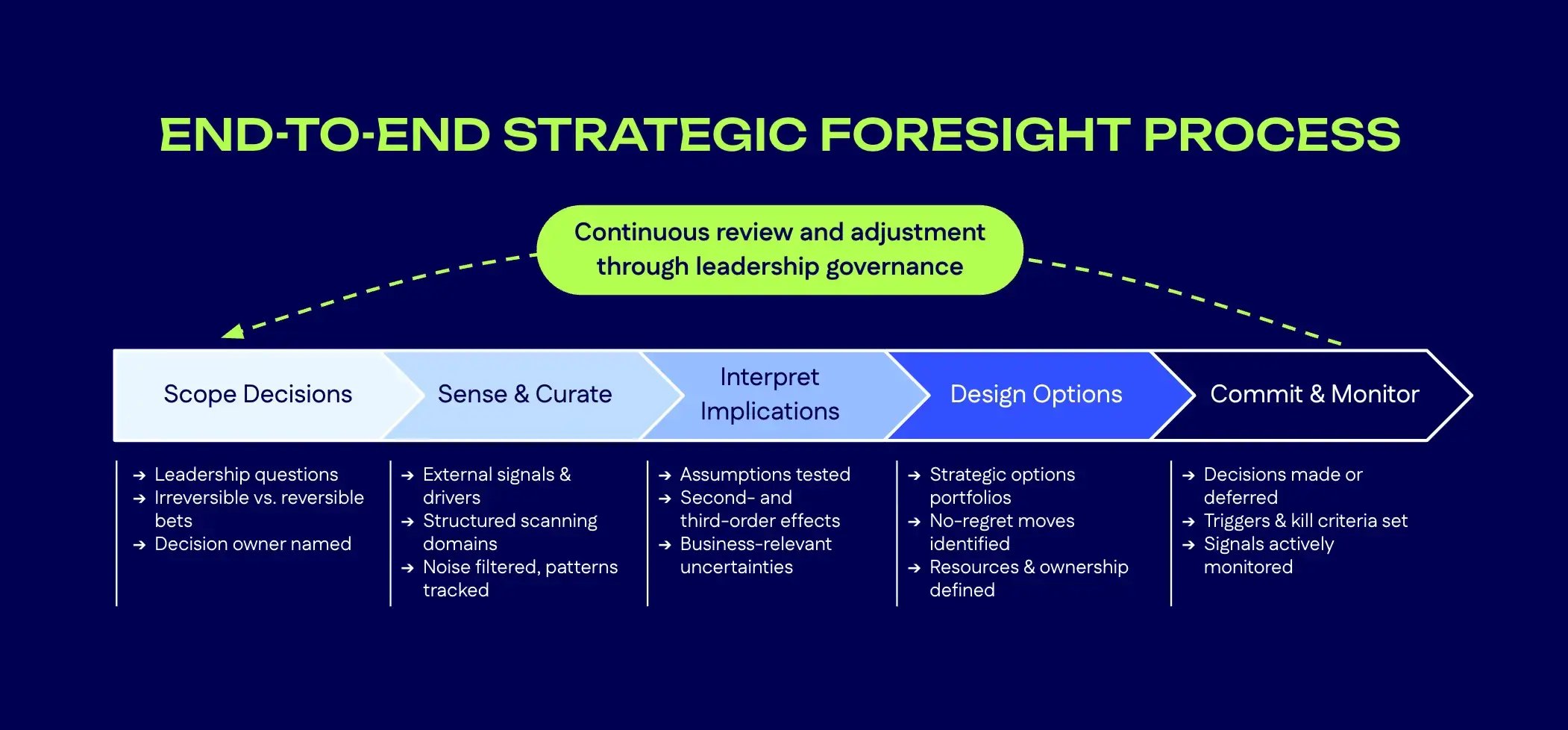
The implementation of a foresight framework follows a closed loop. At Bluemorrow, we emphasize that the loop only counts when it hits the commitment stage. If you want to go deeper on each phase of the process, we broke it down step by step here.
-
Scope the decision domain: Start by scoping decisions, not trends. Ask: Which decisions would we regret not preparing for? This anchors foresight in leadership priorities.
-
Sense and curate: Scan for signals across technology, markets, policy, and society. Curation matters more than volume; noise kills momentum.
-
Interpret implications: Translate signals into implications for your business. Identify second- and third-order effects and assumptions that may break.
-
Design strategic options: Design portfolios of options across horizons to preserve flexibility, ensuring options have clear owners and budgets.
-
Commit and monitor: Commit to options or set triggers. Without commitment, foresight stalls and credibility erodes.
Scenario Planning. A diagnostic wind-tunnel
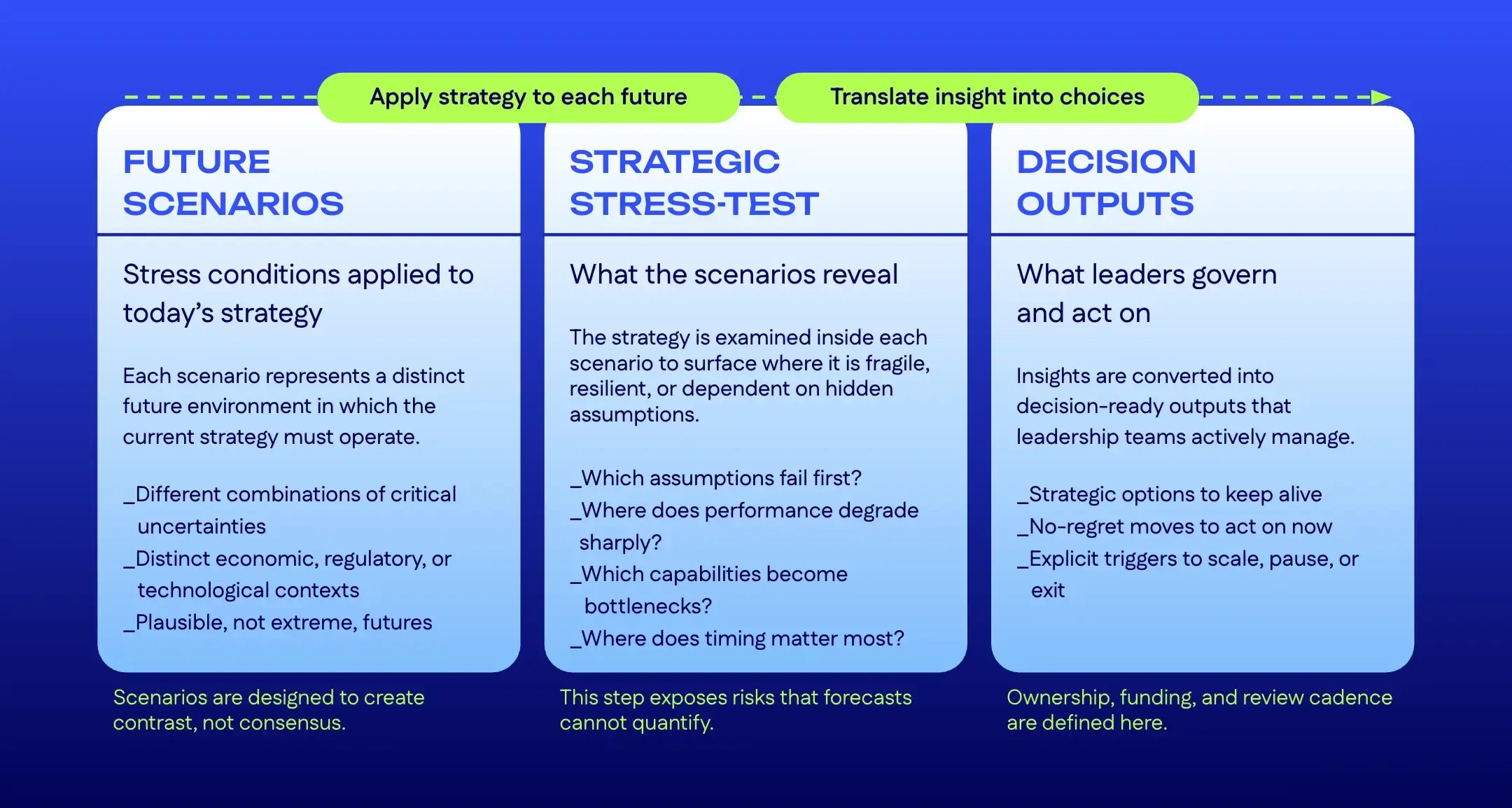
Scenario planning plays a specific role within strategic foresight: it expands strategic imagination and challenges hidden assumptions. Well-designed scenarios describe structurally different futures shaped by critical uncertainties.
In foresight-driven strategy, scenarios are used to test current strategy, expose fragility, and identify where optionality is required. They are always translated into implications, options, and triggers. Without that translation, scenarios remain narratives rather than strategic tools.
If scenario planning is the part of your foresight process you want to get right first, we broke down exactly how to do it – from first principles to execution.
Measuring impact: How leaders quantify foresight value
Leaders rightly ask how foresight creates measurable value. The answer lies in measuring decision quality and timing, not attempting to predict financial returns directly.
Leading indicators (system health)
These show whether foresight is influencing how decisions are made. Metrics include how quickly signals translate into leadership discussions or how often foresight-driven options are considered in investment forums.
Lagging indicators (business impact)
These capture longer-term effects, such as avoided losses, faster pivots in response to change, or improved resilience during shocks. Taken together, these measures provide leaders with confidence that foresight is shaping decisions today and improving outcomes over time.
Using AI in Foresight responsibly
AI can dramatically scale sensing and synthesis, but only when it is deliberately governed. Used well, it extends human capacity to scan large information spaces and detect emerging patterns.
AI is strongest in tasks such as horizon scanning, signal clustering and hypothesis generation. It is weakest when asked to replace judgment, resolve ambiguity or make trade-offs that require contextual understanding. For leaders, the critical distinction is between augmentation and delegation. Responsible use requires clear guardrails, including transparency of sources, human review and explicit assumption audits.
To see what this looks like in a real corporate foresight cycle, including measurable gains in speed and analytical quality, read our article on how AI is transforming strategic foresight at Siemens Professional Education.
Foresight is a choice before it is a capability
The organizations that build a durable competitive advantage in the next decade will not necessarily be those with the best data or the largest strategy teams. They will be the ones that made a deliberate choice to govern uncertainty, to build the systems, habits and decision structures that let them act before clarity arrives.
The framework exists. The methods are proven. The question is whether your leadership team is ready to make foresight a permanent input to the decisions that matter most.
At Bluemorrow, that is exactly what we help organizations build. Schedule a call with Tobias, our Managing Partner and let's talk about possible solutions.