
What Is Commercial Validation?
Commercial validation is the structured process of gathering real-world evidence that a new product, service, or business model will generate sustainable demand and economic value – before committing significant resources to full-scale development. At its core, it answers one deceptively simple question: will the market actually pay for this, in sufficient volume, at a viable margin?
It is not market research. Market research tells you what customers say. Commercial validation tests what they do. The difference between stated interest and actual behavior is where the majority of corporate innovation projects fail and why organizations that validate rigorously before they build consistently outperform those that don't.
Commercial validation sits at the intersection of market evidence, experimental strategy, and financial feasibility. It is distinct from technical validation (can we build it?) and operational validation (can we deliver it?) because it focuses exclusively on one question: is there a commercially viable business here?
This article introduces the full commercial validation framework and the seven components that define it: market demand, customer validation, validation methods, testing approaches, pricing, traction metrics, and go-to-market readiness. Each component is explored in depth in the comprehensive articles linked below. Use this article as your entry point and strategic overview.
Why Commercial Validation matters?
Commercial validation matters because the cost of skipping it is rarely visible until it is far too late. New product launches fail at a rate between 70% and 95%, depending on sector and how failure is defined (Castellion & Markham, Journal of Product Innovation Management, 2013). Most of that failure is commercial – and it is foreseeable.
How does this happen at scale? The answer lies in how corporate organizations make innovation decisions. Internal approval processes, executive sponsorship, and sunk cost bias create powerful momentum behind ideas that have never been tested against real market behavior. By the time a concept reaches market, months or years of development have already been committed – and no one wants to hear that the demand was never really there.
The cost of skipping validation is not just financial. When an unvalidated product fails at scale, the organization absorbs wasted capital, lost time-to-market opportunity, and – in customer-facing industries – reputational exposure. None of these costs appear on validation budgets, because validation never happened.
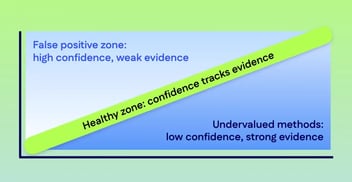
There is also a more subtle risk that senior leaders often underestimate: confusing interest with real demand. When prospects say "that sounds interesting" or "we'd definitely consider that", it feels like validation. It isn't. So what separates genuine demand from polite interest? The answer is behavioral commitment – signed letters of intent, paid pilots, or actual purchase orders. These are the only reliable commercial signals.
The case for structured, evidence-based validation is straightforward. The cost of rigorous validation is typically 1-5% of the cost of a failed full-scale launch. For innovation portfolios managed at corporate scale, that is not a cost. It is risk management with a clear return.
Internal approval is not commercial validation. Passing a stage-gate review, securing budget allocation, or receiving strong internal NPS scores from colleagues are organizational events. They tell you that the innovation has navigated the internal process. They tell you nothing about whether the market will buy it.
The Commercial Validation framework
Commercial validation is a structured framework of seven interconnected components, each of which tests a different dimension of commercial viability. Together, they give you a complete picture – not just of whether demand exists, but of whether you can reach, convert, and retain customers at economics that work.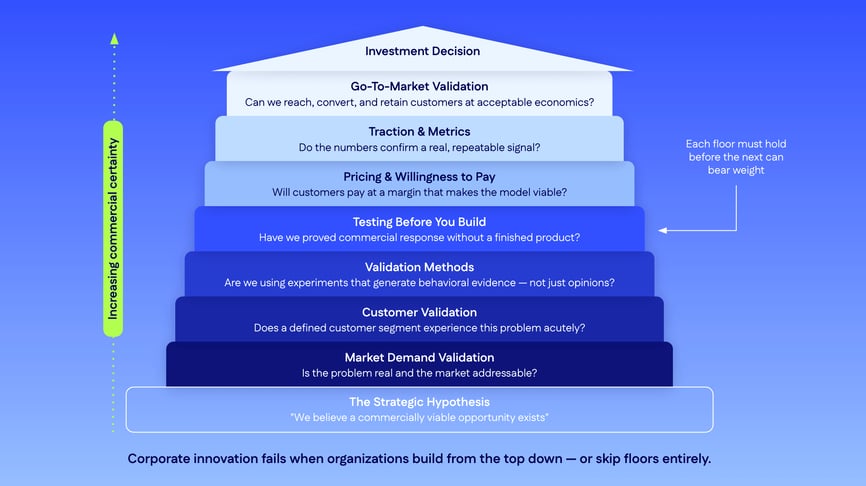
Market Demand Validation
Market demand validation confirms that a real, addressable problem exists and that a sufficient number of customers will prioritize solving it. This is the first and most fundamental test – and also the most commonly skipped.
The common mistake is conflating market size with market demand. A large TAM (Total Addressable Market) tells you the theoretical ceiling. It says nothing about whether customers will actively choose your solution over existing alternatives, or whether they experience the problem acutely enough to change behavior. Real demand validation requires behavioral evidence: search patterns, competitor traction, customer switching behavior, and early signals from real market contact.
For corporate innovators, there is a particular trap worth naming: the Portfolio Extrapolation Trap. This is the assumption that because your existing customers use your current products, they will naturally adopt new ones. Adjacent demand is not validated demand. The customer relationship you have is for the problem you already solve. A new offering requires its own validation, starting from scratch.
Explore the full approach in our article on Market Demand Validation.
Customer Validation
Customer validation is the process of discovering whether a real, painful, and prioritized problem exists before any solution is designed. It is not a survey and it is not a focus group. It is structured discovery that tests the depth, urgency, and ownership of the problem.
The critical distinction here is between identifying customers' real pain points versus their assumed ones. What customers tell you they want and what they are actually struggling with are often two very different things. Jobs-to-be-done methodology – developed by Christensen and colleagues – provides a rigorous framework for uncovering the functional, emotional, and social dimensions of what customers are truly trying to accomplish.
In B2B contexts, customer validation is further complicated by the fact that "the customer" is rarely an individual. You are typically dealing with a buying committee: an economic buyer, a technical buyer, and one or more end users, each with different problems, different incentives, and different veto powers. How do you make sure you are validating with the right person? Validating with only one of these groups is a structural blind spot – you need signal from each role.
Go deeper in our article on Customer Validation.
Validation methods
Validation methods are the specific experiments and research approaches used to generate commercial evidence. They fall into two broad categories: qualitative methods (interviews, ethnography, expert panels) and quantitative experiments (live tests, pilots, pricing experiments, concept tests). The distinction matters because each serves a different purpose at different stages of validation.
What separates effective corporate validation from ineffective validation is choosing the right method for the right context. A landing page test that works for a B2C SaaS product is not appropriate for a B2B industrial platform. A customer discovery interview that surfaces genuine pain in one segment may be structurally unavailable in another because of procurement constraints or confidentiality concerns.
The key principle: test behavior, not opinions. Opinions tell you what people think they want. Behavior tells you what they will actually do. Every dollar spent on opinion-based validation that could have been spent on behavioral testing is a dollar invested in false confidence.
Explore the full selection guide in our article on Commercial Validation Methods for Corporate Innovators.
Testing before you build
Testing before you build means running structured experiments to validate commercial response before any significant engineering or delivery infrastructure is in place. The goal is to answer the commercial question at the lowest possible cost, using the simplest possible stimulus that generates a reliable signal.
The Minimum Viable Concept (MVC) is the right tool for this stage. Unlike an MVP (Minimum Viable Product), an MVC is not a product at all. It is a pre-build stimulus – a concept board, a prototype, a landing page, a service description – used to test whether demand exists before a single line of code is written or a single component is manufactured.
The corporate impulse is to build first and test later. This is expensive. Every round of experimentation that happens before full development investment dramatically reduces the cost of being wrong.
Dig into the full toolkit in our article on Testing Before You Build: Pilots, Prototypes, and Experiments.
Pricing and willingness to pay
Pricing validation is the strongest single commercial signal available during the validation phase. It separates interest from intent. Until a customer is confronted with a real price – and must decide whether to pay it – you have no commercially meaningful evidence of demand.
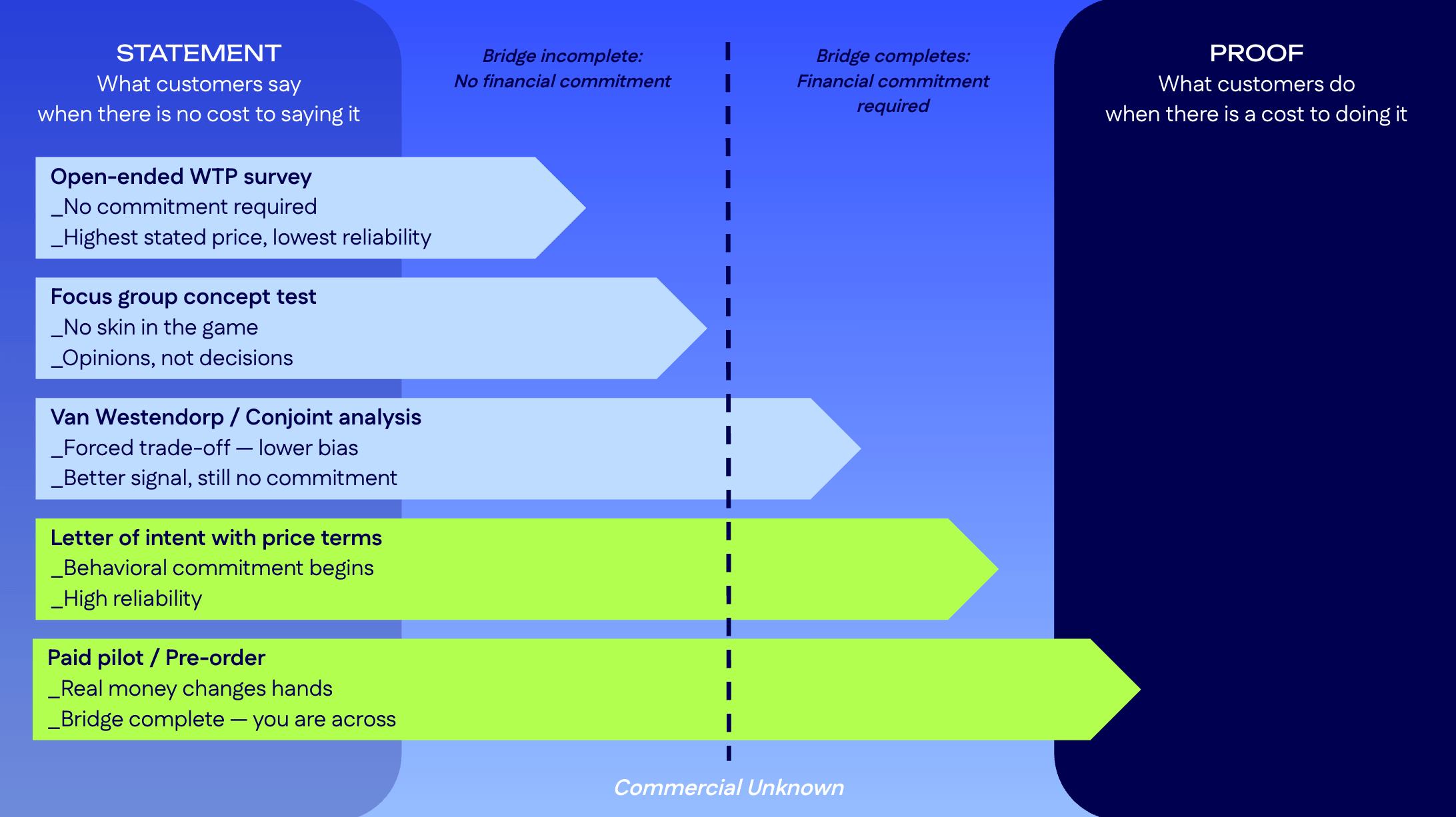
The gap between stated willingness to pay and actual willingness to pay is well-documented in behavioral economics (Kahneman, Thinking, Fast and Slow, 2011). Customers consistently overstate how much they would pay in hypothetical scenarios. The only reliable pricing signal comes from experiments where price is real: pre-orders, paid pilots, or structured pricing tests using validated instruments like the Van Westendorp Price Sensitivity Meter or conjoint analysis.
Pricing validation also serves a second function: it is margin validation. A business model is only commercially viable if the price customers will actually pay exceeds the fully-loaded cost of delivery at scale. Validating demand without validating pricing leaves the most important commercial question unanswered.
Read more in our article on Pricing Validation and Willingness to Pay.
Traction and metrics
Traction is behavioral evidence that commercial demand exists and is responding to your offering. It is not enthusiasm, not internal approval, and not positive feedback from a customer advisory board. Traction is measurable: conversion rates, signed letters of intent, pilot revenue, deposit payments, activation rates.
Different metrics are appropriate at different stages of validation. Early-stage validation requires leading indicators – the behavioral signals that precede purchase decisions: awareness, interest, and intent. Later-stage validation requires lagging indicators: actual revenue, retention, and unit economics. Applying the wrong metric framework to the wrong validation stage produces noise that is routinely mistaken for signal.
For portfolio managers, there is an additional dimension: initiatives at different stages of validation cannot be meaningfully compared using the same metric framework. A concept at the demand-validation stage should not be evaluated on revenue performance. Conflating stages leads to either premature termination of promising concepts or continued investment in commercially dead ones.
Our article on Traction and Validation Metrics covers the full metric framework by stage.
Go-to-market validation
Go-to-market validation tests whether you can actually reach, acquire, and retain your target customer at economics that work – before you commit to scaling. A validated product with an unvalidated route to market will still fail. The route to market is not a delivery mechanism. It is a core commercial assumption that requires its own evidence.
Three questions define GTM validation: Who exactly is the customer (validated Ideal Customer Profile, not assumed)? How do you reach them efficiently (validated acquisition channel and cost)? What do you say to convert them (validated messaging and positioning)?
The corporate-specific challenge here is that existing brand equity and distribution channels may not transfer to new ventures. A new offering that serves a different customer segment, addresses a different pain point, or enters a different competitive context cannot assume it inherits the parent organization's go-to-market advantages. Those assumptions require validation.
Explore the full approach in our article on go-to-market validation.
The Commercial Validation process (step-by-step)
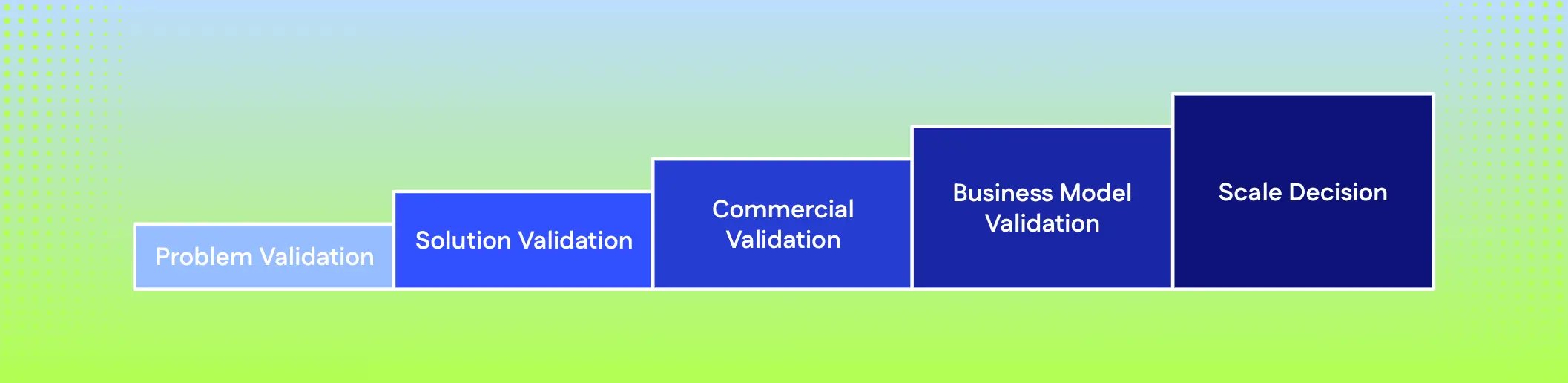
The commercial validation process moves through five sequential stages, each designed to answer a progressively more specific commercial question. But it is not strictly linear. Corporate teams often expect a clean, gate-by-gate progression. In practice, new evidence frequently surfaces assumptions that require cycling back to an earlier stage. This is not failure – it is how rigorous validation is supposed to work.
The five stages work as follows:
-
Stage 1: Problem validation. Before testing any solution, validate that a real, painful, and prioritized problem exists for a defined customer segment. The evidence required here is qualitative: customer discovery interviews, behavioral observation, and secondary research on existing solutions. The question is not "could this be a problem?" but "is this a problem customers actively want to solve?"
-
Stage 2: Solution validation. Once a real problem is established, test whether your proposed solution is a credible response to it. This does not require a built product. A well-designed concept test, a high-fidelity prototype, or a concierge pilot can generate reliable signal about solution-problem fit.
-
Stage 3: Commercial validation. This is the stage that most corporate organizations skip, or conflate with the previous one. Does the solution generate real demand at a price that works? Do customers pay when confronted with a real price? The evidence required here is behavioral: willingness-to-pay experiments, signed LOIs, pre-orders, or paid pilots.
-
Stage 4: Business model validation. A validated solution at a validated price is still not sufficient. The full commercial logic must hold: customer acquisition cost, lifetime value, channel economics, and margin structure. Stage 4 tests whether the economics of the model work – not just whether individual customers will buy.
-
Stage 5: Scale decision. With sufficient evidence across all four dimensions, the organization makes a structured go/no-go decision about scale investment. This decision should be governed by pre-defined validation thresholds, not by the weight of accumulated organizational momentum.
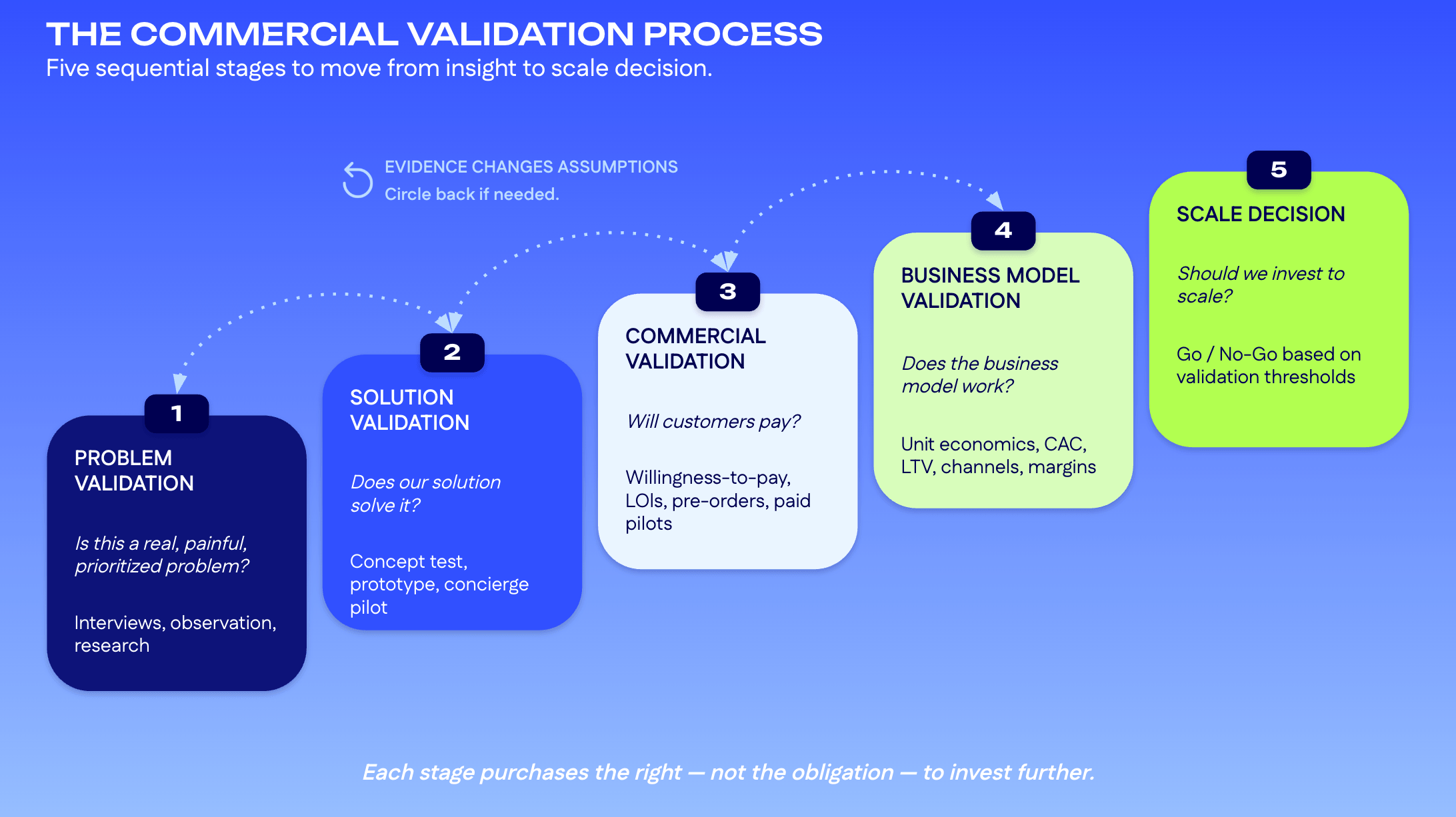
What does progress actually mean in this model? Each stage purchases the right – but not the obligation – to invest further. This is the logic of real options applied to innovation governance (Trigeorgis, Real Options, 1996): staged investment under uncertainty, where each experiment buys information rather than commitment.
Validation methods: an overview
An overview of validation methods makes one thing clear: there is no universal right answer. The appropriate method depends on three variables – what you are testing, at what stage of the validation process you are, and what organizational and market context you are operating in. Getting this selection decision right is as important as running the experiment itself.
Qualitative methods are most valuable early in the process, when the goal is to understand the problem and generate hypotheses about solution-market fit. Customer discovery interviews, ethnographic observation, and expert panels produce the depth of insight needed to design better experiments later.
Quantitative methods become appropriate once hypotheses are formed and behavioral evidence is required. Landing page tests, pricing experiments, pilot programs, and live market tests generate the kind of measurable signal that can drive go/no-go decisions.
One dimension that most frameworks ignore is the corporate-specific challenge of validation under confidentiality constraints. Large organizations cannot always expose new concepts to the external market without competitive risk. This creates a real tension between the need for external signal and the need for discretion. Some contexts support validation under the parent brand. Others require standalone identity, anonymized testing, or NDA-protected pilot programs. This is a reason to design validation approaches that respect organizational constraints while still generating real behavioral evidence.
How do you validate externally when you cannot publicly expose the concept? The answer depends on your competitive context – but it always starts by separating the validation question from the brand question. Our article on Commercial Validation Methods explores the full method selection framework in detail.
Metrics for Commercial Validation
Metrics for commercial validation exist because "validated" is not a feeling – it is a measurable state defined by pre-agreed evidence criteria. Without explicit metrics and pre-defined thresholds, any result can be made to look like success. The most dangerous validation reviews are the ones where the goalposts are moved after the experiment runs.
The most common metrics in commercial validation are organized by what they measure:
-
Demand signals: organic search traffic, inbound inquiry rates, email sign-up conversion rates
-
Intent signals: letter of intent count, deposit or pre-order rates, paid pilot commitments
-
Commercial signals: pilot revenue, conversion rate from prospect to paying customer, average contract value
-
Business model signals: customer acquisition cost, payback period, gross margin per unit
What these metrics have in common is that they are external and behavioral. They measure what real market participants actually do, not what internal stakeholders believe.
So why do so many organizations use the wrong metrics? This distinction matters because corporate organizations routinely confuse internal signals with external ones. As mentioned positive stage-gate reviews, favorable internal surveys, and strong stakeholder NPS are organizational metrics. They measure internal alignment, not commercial viability. Using them as validation evidence is structurally dangerous, because it creates the appearance of validated demand while leaving the actual commercial question completely untested.
For validation to be credible, thresholds must be defined before experiments begin. Deciding after results arrive what counts as "good enough" is a form of motivated reasoning. Pre-defined thresholds protect the integrity of the validation process and the quality of the go/no-go decision that follows.
Explore the full metric framework and portfolio reporting approach in our article on Traction and Validation Metrics.
The internal validation trap
The Internal Validation Trap is the organizational pattern in which internal process substitutes for market evidence. It is the most predictable and most expensive failure mode in corporate innovation – and it is a governance design failure, not a cultural one.
Here is how it happens. A corporate innovation team develops a concept with genuine enthusiasm and internal support. The concept moves through stage-gate reviews, secures budget approval, and earns strong scores in internal evaluations. The team interprets these events as validation. They are not. They are evidence of successful internal navigation, which is a different thing entirely.
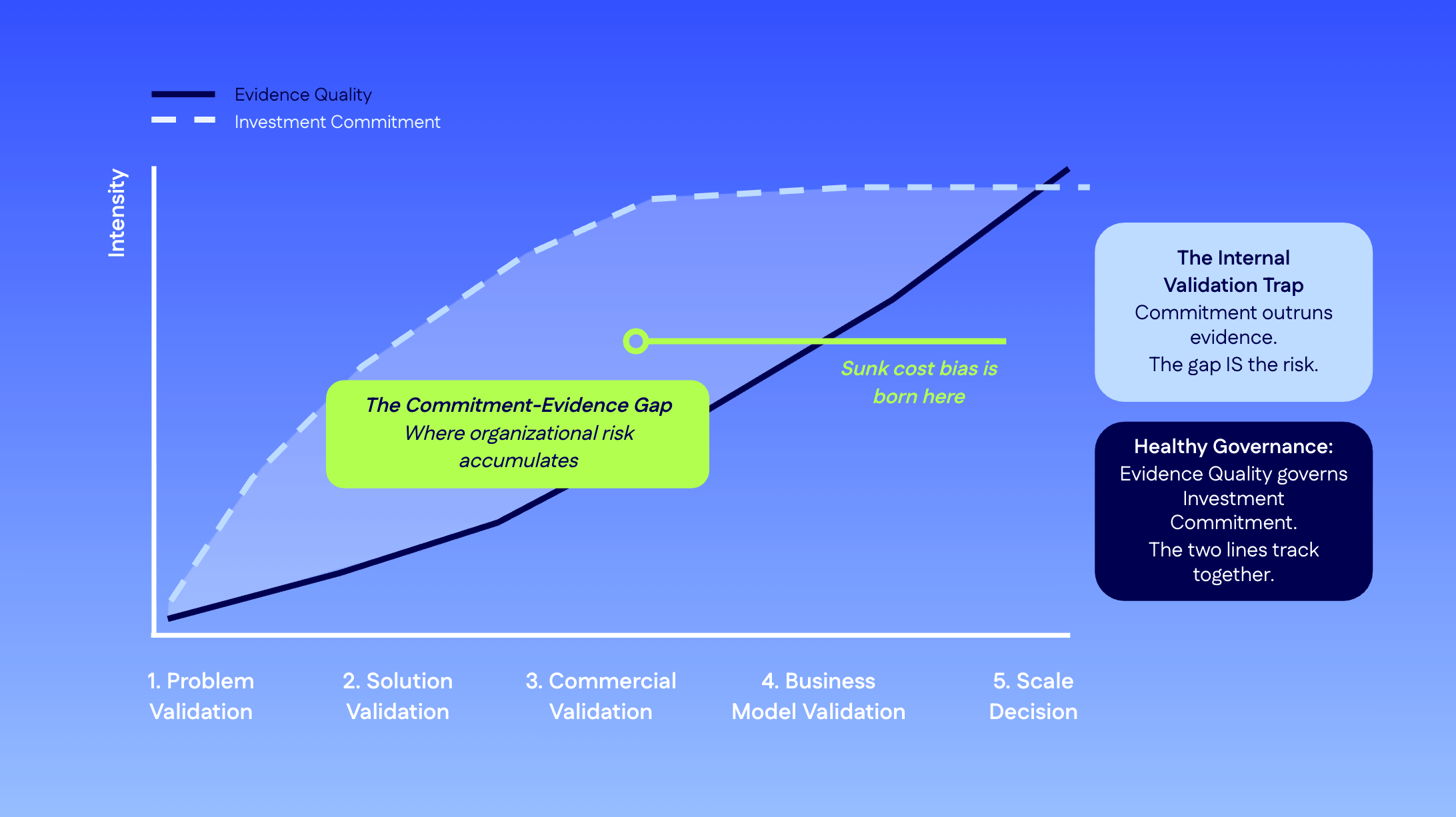
The structural reason this happens is important. The teams most invested in advocating for an innovation project are typically the same teams responsible for interpreting its validation signals. This creates predictable, and largely invisible, bias. Ambiguous signals are read as positive. Weak evidence is framed as early-stage promise. Negative customer feedback is attributed to poor articulation rather than poor product-market fit. This is not deception. It is the natural consequence of asking advocates to be evaluators.
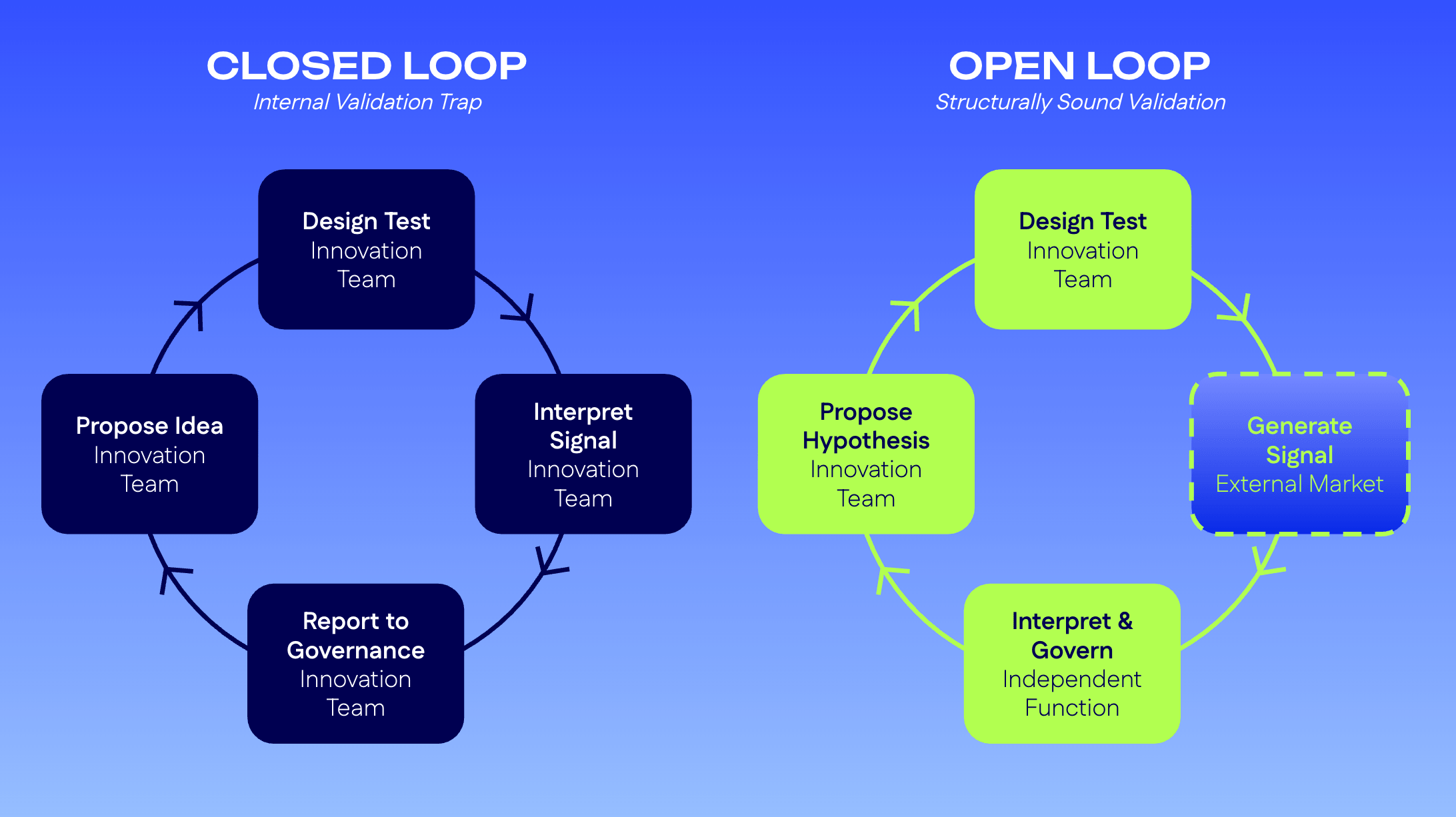
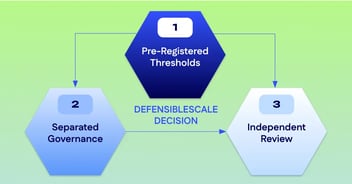
How do you break out of this loop? The fix requires separating validation governance from innovation advocacy. The team championing an innovation should not hold sole authority over its go/no-go decisions. External signal collection, independent review, and pre-defined success criteria are the structural mechanisms that address this.
Several other patterns compound the Internal Validation Trap:
-
Validating with the wrong audience. Existing customers are not the target market for genuinely new ventures. They provide useful input on incremental improvements to what you already sell. They are structurally poor validators for new business concepts because their frame of reference is shaped by your existing relationship.
-
Skipping pricing validation entirely. This is the most common omission in corporate innovation programs. Demand can appear strong while commercial viability is completely untested. Price is the moment of truth.
-
Misreading weak signals as confirmation. A handful of positive customer interviews, a reasonable concept test score, or a pilot that didn't generate explicit refusals – these are not commercial validation. They are early directional data that warrants further testing, not investment decisions.
-
Building too early. Committing to full product development before the commercial question is answered amplifies every other error. Sunk cost bias then makes it harder to stop, even when subsequent evidence is clearly negative.
This connects directly to governance at scale. Our articles on Customer Validation and From Validation to Scale explore the organizational design responses in detail.
AI in Commercial Validation
AI in commercial validation is changing the front end of the process in ways that matter – compressing weeks of customer research and competitive analysis into hours, and opening up new capabilities for hypothesis generation and interview synthesis. But it is also introducing specific risks that most organizations have not yet examined carefully enough, and those risks deserve as much attention as the benefits.
On the capability side, AI accelerates the discovery phase in ways that matter. Large language models can synthesize customer interview transcripts at scale, identify patterns across competitive landscapes, generate hypothesis sets for testing, and assist in designing validation experiments. What used to take weeks of manual analysis can now happen in hours. This is a genuine productivity gain for innovation teams.
But three risks deserve more attention than they currently receive.
-
Confirmation bias amplification. AI surfaces and reinforces patterns that are consistent with the hypothesis it is given. Feed a model your business case and ask it to identify supporting evidence, and it will find supporting evidence. This is not validation – it is structured confirmation. The risk is not that the AI is wrong. The risk is that it makes existing assumptions look more validated than they are.
-
Hallucinated demand signals. Synthetic customer personas and AI-generated market profiles are not behavioral evidence. They are structured reflections of training data. When an AI model suggests that "customers in this segment would likely respond positively to this offering," it is making a probabilistic inference based on patterns in text – not reporting on what real customers in your specific market will actually do. Organizations that use AI-generated personas as a substitute for real customer discovery are not validating demand. They are modelling it. The difference is the difference between evidence and assumption.
-
False positives in market sizing. AI-powered market sizing tools can produce impressive-looking TAM estimates. What they cannot do is distinguish between latent demand (a problem that exists but customers are not actively trying to solve) and active demand (a problem customers are already spending money to address). This distinction is commercially critical, and it requires real market contact to establish.
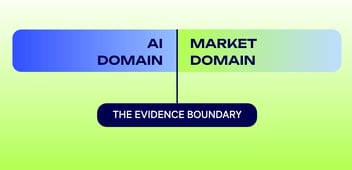
So where does AI belong in the validation stack? Our perspective at Bluemorrow is straightforward: AI accelerates the discovery and synthesis phases of validation. It does not replace behavioral market evidence, and it should not be used to bypass the hard work of real customer contact. The appropriate model is AI-accelerated front end, human-governed signal interpretation.
Explore the full argument in our article on Commercial Validation in the Age of AI.
Decision framework: go / no-go
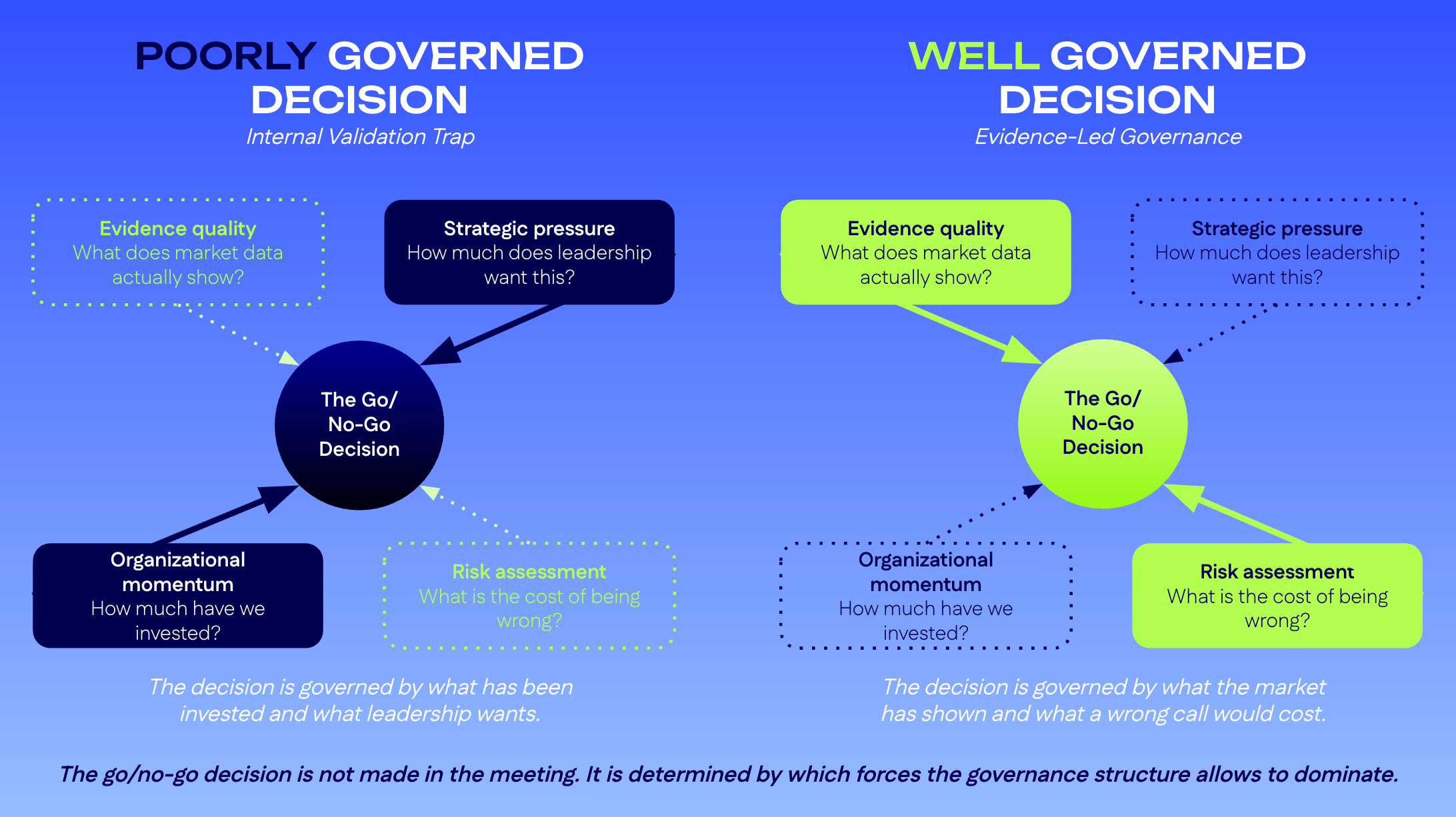
A go / no-go decision framework gives senior leaders a structured way to answer one of the hardest questions in corporate innovation: when is a concept validated enough to justify committing scale investment? The answer is not a fixed threshold that applies universally. It depends on the nature of the innovation, the scale of the proposed investment, the reversibility of the commitment, and, critically, whether the evidence was generated externally or internally.
Validation thresholds should be defined before experiments begin, not negotiated after results arrive. Post-hoc evaluation — deciding after you see the results what counts as success — is the mechanism by which sunk cost bias enters the decision process. Pre-defined thresholds protect the quality of the decision.
A structured go/no-go framework evaluates evidence across four dimensions:
-
Commercial demand: Is there behavioral evidence of real demand at the targeted scale? (LOIs, pre-orders, pilot revenue)
-
Willingness to pay: Have customers demonstrated willingness to pay at a margin that makes the business model viable?
-
Route to market: Is there evidence that you can acquire target customers at an acceptable cost?
-
Business model: Do the unit economics hold at a realistic scale of operations?
 Three outcomes are possible.
-
Continue: the evidence across dimensions is sufficient to justify the next stage of investment.
-
Pivot: one or more dimensions reveal a structural problem with the current approach, but the core problem-solution logic is intact.
-
Stop: the commercial evidence does not support further investment, and the opportunity cost of continued development exceeds the potential return.
Why is the stop decision so rarely made, even when evidence warrants it? The hardest outcome is stopping. Corporate organizations are structurally poor at terminating innovation projects, because the teams most likely to be evaluated on the project's success are the same teams making the go/no-go call. This is why independent review is a structural requirement.
The "zombie project" phenomenon – projects that persist long past the point where honest evidence would have killed them – is one of the primary drags on corporate innovation portfolio efficiency. The cost is not just financial. It is the opportunity cost of resources that could have been deployed on concepts with genuine commercial potential.
For a complete governance framework, see our article on From Validation to Scale: When to Commit.
Conclusion
Commercial validation is not a step in the innovation process. It is the discipline that makes the innovation process credible.
The seven components of the commercial validation framework – market demand, customer validation, validation methods, pre-build testing, pricing and willingness to pay, traction metrics, and go-to-market validation – are an interconnected system of evidence generation that, taken together, answer the only question that ultimately matters: is there a commercially viable business here, and can we build it at a margin that works?
For organizations managing innovation at scale, the governance dimension is at least as important as the methodological one. Structured validation without governance mechanisms to protect signal integrity is still vulnerable to the Internal Validation Trap. The framework only works when advocacy and evaluation are structurally separated, when thresholds are set before experiments run, and when negative evidence is treated as valuable information rather than a problem to be managed.
At Bluemorrow, we build commercial validation into every stage of our innovation and venture-building work. Our approach is systematic, grounded in real market evidence, and designed for the complexity of corporate contexts where speed, governance, and organizational dynamics all operate simultaneously.
Ready to build a validation-first innovation practice? Book a validation strategy conversation with Michael Augsburger.